Yet Another Successful Solar Installation at St. Thomas Mount, Chennai!
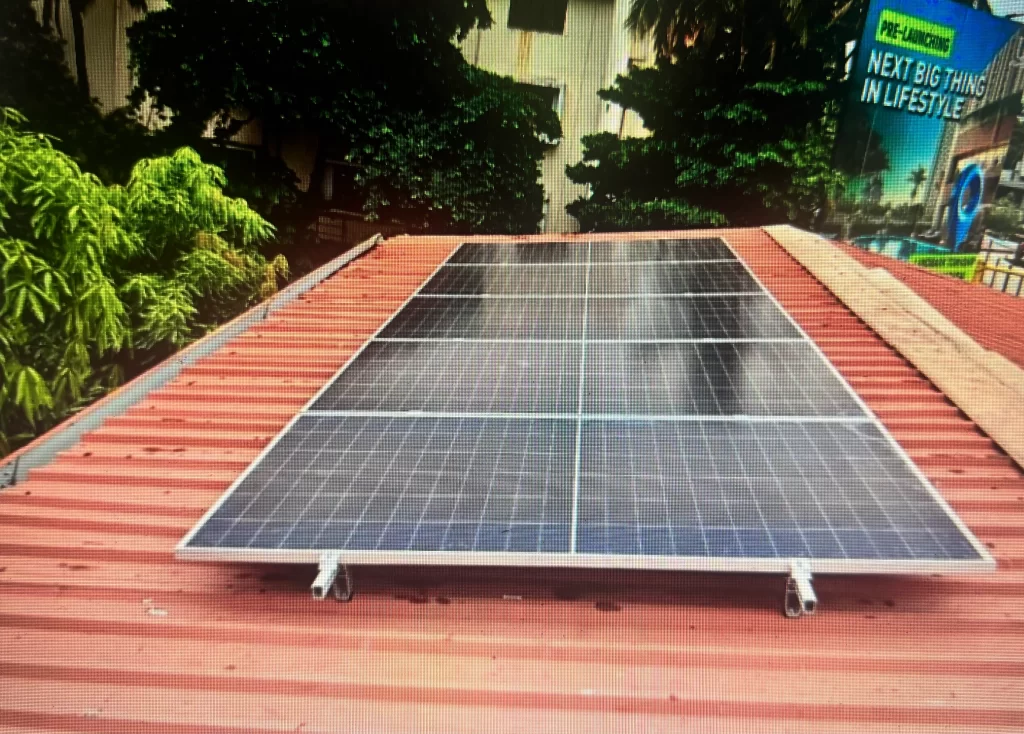
Yet Another Successful Solar Installation at St. Thomas Mount, Chennai! Home We are delighted to announce the successful installation and commissioning of a 3 kW Rooftop Solar PV System at St. Thomas Mount, Chennai, by Balaji Renewable Solution Pvt. Ltd. This project has been executed with a focus on quality components, electrical safety, reliable performance, and professional installation standards. 🔆 System Configuration: RenewSys TOPCon DCR Bifacial 600 Wp – 5 Nos. Total Solar Capacity – 3.00 kWp Enphase IQ8P Bifacial Microinverters with Q Cables Enphase Envoy for system communication and monitoring 🔌 Electrical & Safety: Polycab 6 Sq.mm EN Type DC Cables Polycab 6 Sq.mm FRLS AC Cables – Red, Black & Green 3 Nos. Earthing with 1 Metre SS304 Lightning Arrester UPVC Pipes & Fittings for protected and organized cable routing 🏗️ Mounting Structure: Sunrack 150 mm Height Long Rail Structure Professionally installed for proper module support, alignment, stability and roof clearance. 🚚 Complete EPC Scope: ✅ Transportation ✅ Structure Installation ✅ Solar Module Installation ✅ Microinverter & Electrical Installation ✅ DC & AC Cabling ✅ Earthing & Lightning Protection ✅ Testing & Commissioning At Balaji Renewable Solution, we believe that a solar plant is more than just panels on a rooftop. Quality engineering, correct component selection, electrical safety and professional execution are what make a solar system reliable for the long term. Another successful rooftop. Another customer moving towards cleaner, smarter and more sustainable energy. ☀️🌱 Balaji Renewable Solution Pvt. Ltd. Engineering Sustainable Energy. Powering a Greener Future. #SolarEnergy #RooftopSolar #SolarPV #RenewableEnergy #CleanEnergy #SolarInstallation #Chennai #TamilNadu #Enphase #RenewSys #TOPCon #BifacialSolar #MicroInverter #SolarEPC #GreenEnergy #SolarIndia #SustainableEnergy
Rooftop Redesign Success: 2.2 kW to 6.5 kW Hybrid Solar Transformation in Madambakkam, Chennai
Rooftop Redesign Success: 2.2 kW to 6.5 kW Hybrid Solar Transformation in Madambakkam, Chennai Home Another successful hybrid solar transformation completed by Balaji Renewable Solution Pvt Ltd at Madambakkam, Chennai.This project was much more than a standard installation—it required careful engineering and strategic system redesign. The Challenge: A Shaded Existing Array The customer already had an existing 2.2 kW rooftop solar system using 550 Wp PERC Bifacial modules. However, after extending the building, the newly constructed portion created significant shading on the existing array, reducing energy generation. The Engineering Solution After conducting a detailed site assessment, our engineering team redesigned the complete rooftop layout. We carefully dismantled and relocated the existing 2.2 kW solar array to the newly available terrace and expanded the plant with an additional 4 kW using high-efficiency 620 Wp Vikram TopCon Bifacial modules, creating a total installed capacity of approximately 6.5 kW. To meet the customer’s increasing energy demand and provide uninterrupted power, we recommended and installed the Solaryaan All-in-One 5 kW Single-Phase Hybrid Inverter integrated with a 10 kWh High Voltage Lithium Battery. An additional challenge was that the customer’s electricity connection had been converted from a domestic tariff to a commercial tariff due to EB changes. Considering the higher electricity cost, upgrading to a hybrid solar solution became the most practical and economical choice. Project Highlights Total Solar Capacity: ~6.5 kW Solaryaan 5 kW All-in-One Hybrid Inverter Integrated 10 kWh High Voltage Battery Existing 2.2 kW array relocated to eliminate shading losses Added 4.3 kW Vikram 620 Wp TopCon Bifacial modules Smart rooftop redesign for maximum generation The Result The home now operates almost entirely on solar power during the daytime. During the evening, the integrated battery seamlessly powers the home, significantly reducing dependence on the grid. Improved energy generation, optimized rooftop utilization, and enhanced energy independence. At Balaji Renewable Solution, we believe every rooftop presents a unique engineering challenge. Instead of simply adding more panels, we design intelligent energy systems that maximize performance, reliability, and long-term savings. Customer: Nivetha Muralidharan – “Thank you for the opportunity and belief in us.” Tags: #BalajiRenewableSolution #HybridSolar #Solaryaan #SolarEnergy #BatteryStorage #EnergyStorage #TopCon #BifacialSolar #RenewableEnergy #CleanEnergy #SolarPower #Chennai #Madambakkam #EnergyIndependence #ResidentialSolar #SolarEngineering
Another Productive Week at Balaji Renewable Solution Pvt Ltd – 4 Successful Solar Installations Commissioned!
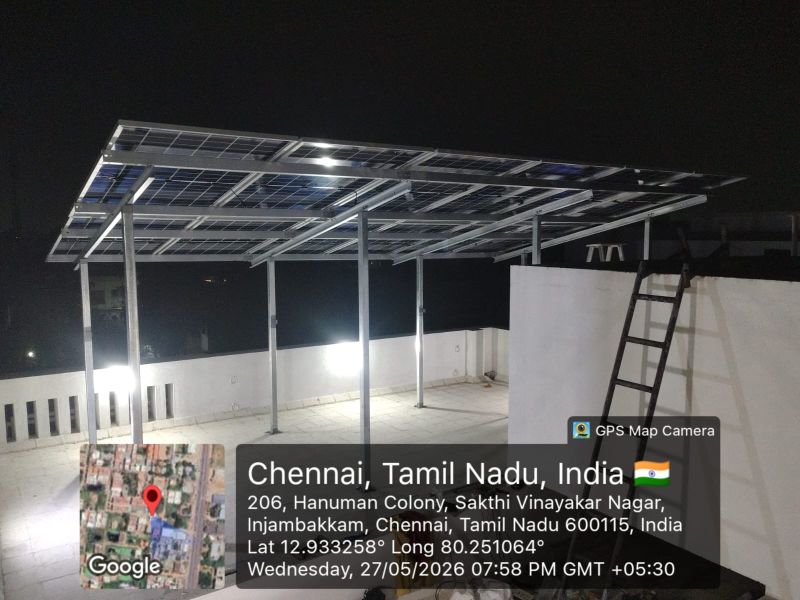
Another Productive Week at Balaji Renewable Solution Pvt Ltd – 4 Successful Solar Installations Commissioned! Home We are pleased to share that our installation team has successfully completed 4 solar projects this week, comprising 3 Enphase Microinverter Systems and 1 Hybrid Solar + Battery Energy Storage System (BESS) installation. A special appreciation to Mr. Velmurugan and his dedicated installation team for their commitment, workmanship, safety standards, and timely execution. Projects Completed This Week ✅ Madambakkam Capacity: 5.31 kW Configuration: 3-Phase Technology: Enphase Microinverter System ✅ Adambakkam Capacity: 4.13 kW Configuration: Single Phase Technology: Enphase Microinverter System ✅ ECR Capacity: 7.50 kW Configuration: 3-Phase Technology: Enphase Microinverter System ✅ Perungalathur Capacity: 4.13 kW Solar Plant Inverter: Solaryaan 5 kW All-In-One Hybrid Inverter Battery Storage: 10.76 kWh Lithium Battery Energy Storage System Application: Hybrid Solar with Backup Power Solution Premium Components Used To ensure long-term performance, reliability, and safety, all installations were executed using high-quality and industry-approved components: Solar Modules RenewSys 590 Wp TOPCon DCR Bifacial Modules Axitec 625 Wp Bifacial Non-DCR Modules (Renganathan Project) Mounting Structures Heavy Duty Hot Dip Galvanized (HDG) High-Rise Structures DC Side Components 6 Sq.mm EN Standard Solar DC Cables (Red & Black) Stäubli Original MC4 Connectors AC Side Components Polycab 6 Sq.mm FRLS AC Cables (Red & Black) Earthing & Lightning Protection 1.2 Meter Copper Bonded Earth Electrode (250 Micron Coating) Chemical Earthing System SS304 Lightning Arrester 2 Meter GI Mast Dedicated Down Conductor with Insulated Lugs Cable Protection & Routing Astral UPVC Pipes and Fittings Regulatory Compliance Complete Electricity Board Documentation Net Metering Application Processing Government Fee Payments and Follow-up Support Why Quality Matters A solar plant is only as reliable as the quality of its installation. While module and inverter selection are important, equal emphasis must be placed on: Proper earthing design Lightning protection Certified connectors and cables Corrosion-resistant structures Professional documentation and compliance At Balaji Renewable Solution Pvt Ltd, our focus remains on delivering systems that are engineered for performance, safety, and long-term value rather than merely achieving installed capacity targets. Congratulations once again to Mr. Velmurugan and Team for successfully completing these installations and contributing towards a cleaner and more sustainable energy future.
Another Successful Hybrid Solar Installation Completed in Vellore
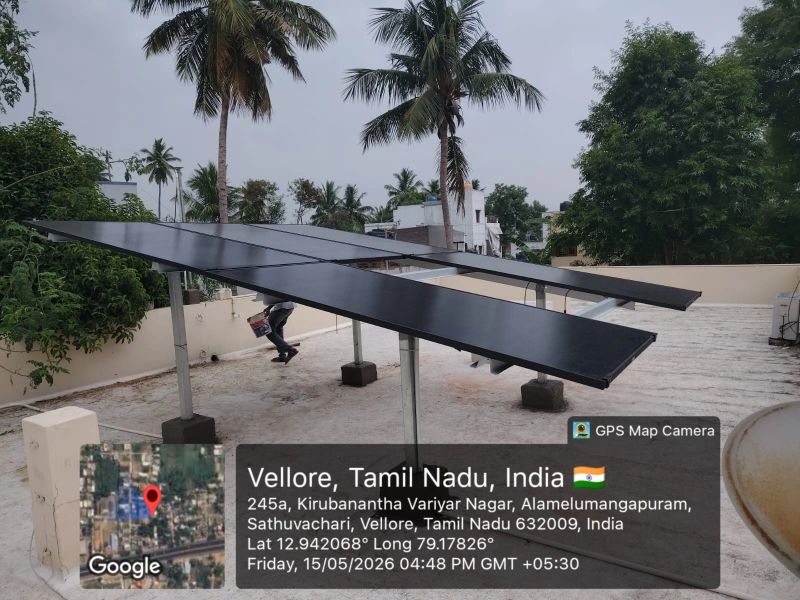
Another Successful Hybrid Solar Installation Completed in Vellore Home Yet another successful Hybrid Solar Power System has been commissioned in Vellore under the residential clean energy transition initiative. We are proud to deliver a high-efficiency hybrid system designed for maximum generation, backup support, and long-term reliability. System Configuration Solar Capacity: 3.10kW Hybrid Solar Power System Solar Modules: 5 Nos of Premier Energies 620Wp DCR TOPCon Bifacial G12R All Black Modules Hybrid Inverter: Deye 3.6kW Single Phase Hybrid Inverter Lithium Battery: Deye 5kWh LV Single Phase Battery (Pending at Distribution End) BOS & Protection Components Feston DCDB & ACDB with Changeover arrangement and DC MCCB protection Hot Dip Galvanized (HDG) Square Tube Module Mounting Structure customized as per site requirements Polycab EN Type 6 sq.mm DC Solar Cables Polycab FRLS 6 sq.mm AC Cables Stäubli Original MC4 Connectors for safe and reliable DC connectivity 3 Nos of 1.2 Meter, 250 Micron Copper Bonded Chemical Earthing System 1 Meter SS304 Lightning Arrester mounted on GI Mast with dedicated down conductor Astral UPVC Pipe & Fittings for professional cable routing and protection Scope Included Complete Supply Installation & Commissioning Transportation Safety & Protection Integration EB Net Metering Support The use of high-wattage TOPCon bifacial all-black modules combined with a Deye hybrid platform ensures improved energy yield, modern aesthetics, and future-ready battery integration capability. Hybrid systems are rapidly becoming the preferred solution for residential consumers seeking uninterrupted power and lower electricity costs. Executed by Balaji Renewable Solution Pvt Ltd #SolarEnergy #HybridSolar #Deye #PremierEnergies #BifacialModules #Topcon #RooftopSolar #RenewableEnergy #SolarPower #NetMetering #CleanEnergy #EnergyIndependence #TamilNadu #Vellore #BalajiRenewableSolution
3.48kW Hybrid Solar Power System Installation Under PM Surya Ghar Yojana – A Complete Residential Clean Energy Deployment
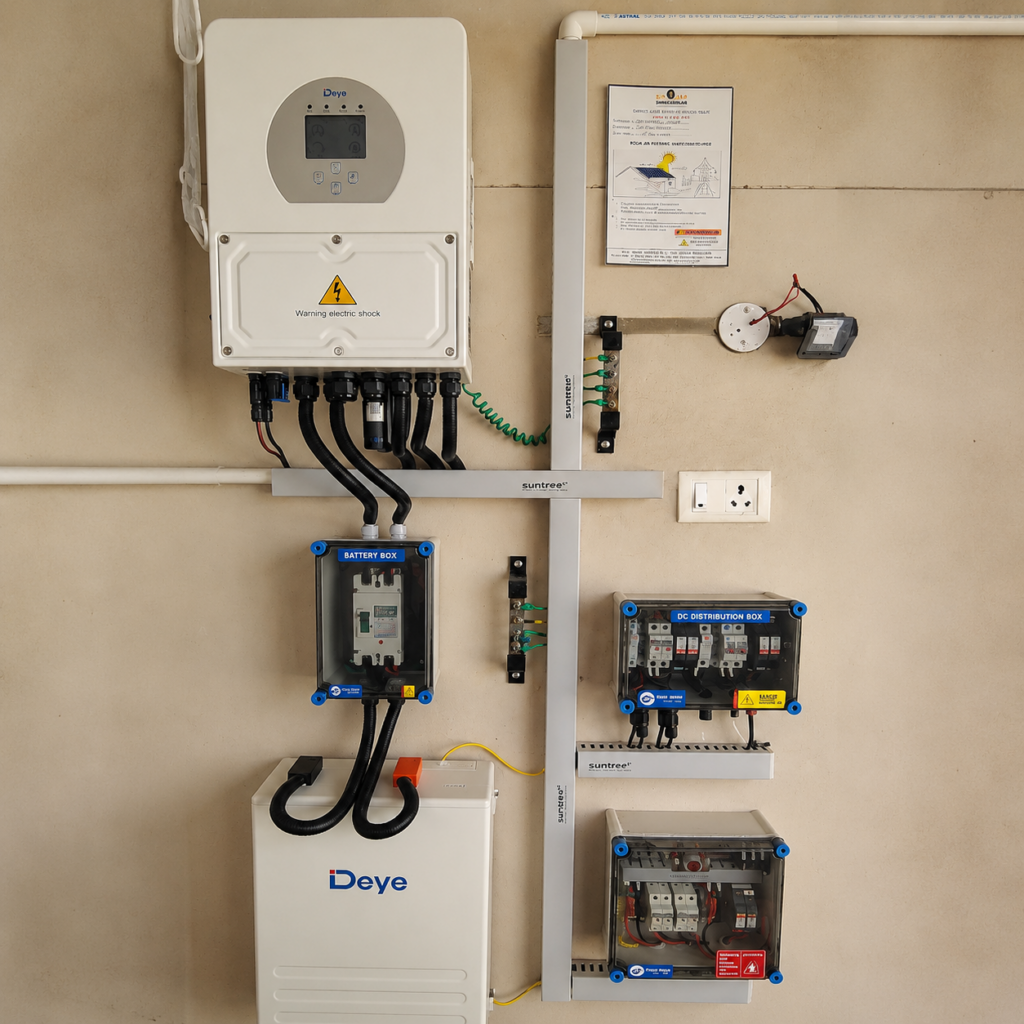
3.48kW Hybrid Solar Power System Installation Under PM Surya Ghar Yojana – A Complete Residential Clean Energy Deployment Home 3.48kW Hybrid Solar Power System Installation Under PM Surya Ghar Yojana Another successful residential clean energy deployment under the Government of India’s flagship PM Surya Ghar: Muft Bijli Yojana scheme. We are pleased to complete a 3.48kW Solar Hybrid Power System installation designed to provide uninterrupted power, reduced electricity bills, and long-term energy independence for the consumer. System Configuration Solar Capacity: 3.48kW Hybrid Solar Power System Solar Modules: 6 Nos of Emmvee DCR TOPCon Bifacial M10R 580Wp High-Efficiency Modules Hybrid Inverter: Deye 5kW Single Phase Hybrid Inverter Battery Storage: Deye 5.1kWh LiFePO4 Battery (Battery installation pending due to temporary stock unavailability) BOS & Protection Components Feston DCDB & ACDB with Changeover arrangement and DC MCCB protection Hot Dip Galvanized (HDG) Square Tube Module Mounting Structure customized as per site requirements Polycab EN Type 6 Sq.mm DC Solar Cables Polycab FRLS 6 Sq.mm AC Cables Stäubli Original MC4 Connectors for reliable DC connectivity 3 Nos of 1.2 Meter, 250 Micron Copper Bonded Chemical Earthing System 1 Meter SS304 Lightning Arrester mounted on 2 Meter GI Mast with dedicated down conductor Astral UPVC Pipe & Fittings for professional cable routing and protection Scope Included ✅ Complete Supply ✅ Installation & Commissioning ✅ Transportation ✅ Electrical Safety Integration ✅ EB Net Metering Processing Charges Included This hybrid system is designed not only for energy savings but also for backup support during power interruptions. With LiFePO4 battery integration, the consumer will have enhanced reliability, better energy management, and future-ready solar infrastructure. The PM Surya Ghar initiative is significantly accelerating rooftop solar adoption across India, especially among residential consumers looking for long-term savings and energy security. Hybrid systems are becoming the preferred choice because they combine solar generation, battery backup, and grid synchronization into a single intelligent platform. Executed by Balaji Renewable Solution Pvt Ltd #SolarEnergy #HybridSolar #PMSuryaGhar #RenewableEnergy #SolarInstallation #Deye #Emmvee #LiFePO4 #NetMetering #SolarPower #EnergyStorage #RooftopSolar #CleanEnergy #TamilNadu #BalajiRenewableSolution #SolarHybridSystem
Understanding Active & Reactive Power Sharing in BESS: A Simple Guide
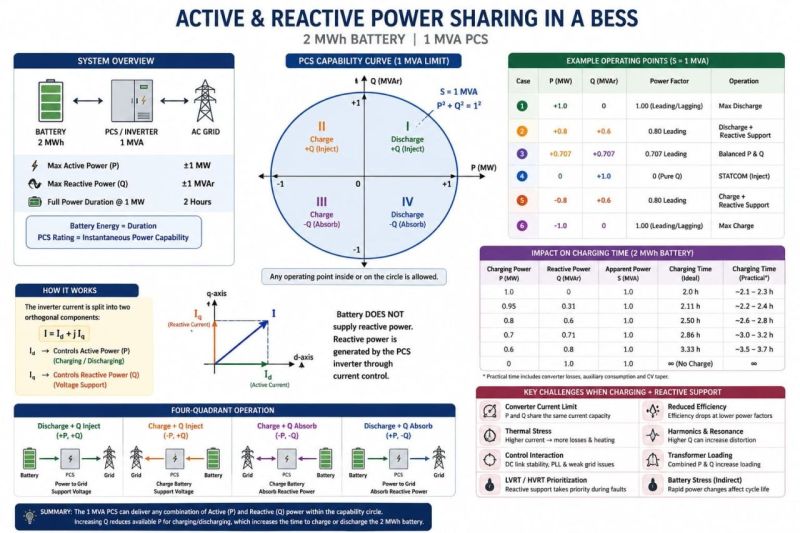
Understanding Active & Reactive Power Sharing in BESS: A Simple Guide Home Simple Understanding of Active & Reactive Power Sharing in BESS A BESS has: Battery Capacity (MWh) → How much energy is stored PCS/Inverter Rating (MVA) → How much power can flow at a time Example: Battery = 2 MWh PCS = 1 MVA So maximum charging/discharging power is about 1 MW, giving: 2 hours backup at full load The inverter shares its capacity between: Active Power (P) → Actual charging/discharging power Reactive Power (Q) → Voltage & grid support Their limit is: P² + Q² = S² If the inverter provides more reactive power, available active power reduces. Example: 1 MW charging → 2 hours charging time 0.8 MW charging + 0.6 MVAr support → charging time increases to 2.5 hours Reactive power does not consume battery energy directly. It is generated by the inverter for grid stability and voltage support. That’s why modern BESS can: Store energy Support voltage Improve power factor Work like a STATCOM Support weak grids simultaneously
What is On-Grid?
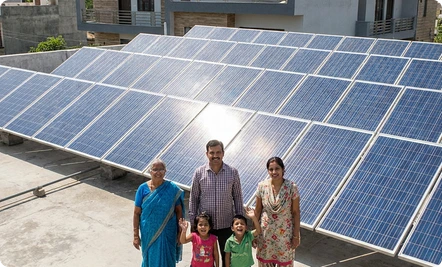
What is On-Grid? Home What Is an On-Grid Inverter? As solar energy adoption continues to grow, understanding the role of an on-grid inverter is essential for homeowners and businesses considering solar power. Often called a grid-tied inverter, an on-grid inverter is the heart of a grid-connected solar system, converting the electricity generated by solar panels into usable power for your home, business, and the utility grid. (The Department of Energy’s Energy.gov) What Is an On-Grid Inverter? An on-grid inverter is a device that converts Direct Current (DC) electricity produced by solar panels into Alternating Current (AC) electricity, which is the standard form of power used by household appliances and the electrical grid. Unlike off-grid systems, an on-grid inverter operates while connected to the public utility grid. (The Department of Energy’s Energy.gov) This connection allows users to consume solar energy during the day while importing electricity from the grid when solar production is insufficient. How Does an On-Grid Inverter Work? The operation of an on-grid inverter can be explained in four simple steps: Solar Panels Generate DC Power Solar panels capture sunlight and convert it into DC electricity. However, most electrical appliances cannot use DC power directly. (smartenpowersystems.in) DC Power Is Converted to AC Power The inverter converts DC electricity into AC electricity that matches the voltage and frequency requirements of the local power grid. (The Department of Energy’s Energy.gov) Power Is Supplied to the Building The converted AC electricity is first used to run appliances, lighting, machinery, and other electrical loads within the property. (smartenpowersystems.in) Excess Energy Is Exported to the Grid If the solar system produces more electricity than is being consumed, the surplus power is automatically fed back into the utility grid. In regions where net metering is available, users can receive credits for the exported electricity. (TTNergy) Key Features of an On-Grid Inverter Grid Synchronization An on-grid inverter continuously synchronizes its output voltage and frequency with the utility grid to ensure safe and seamless power transfer. (EAPL World) High Conversion Efficiency Modern on-grid inverters typically operate with high efficiency, maximizing the usable energy generated by solar panels. (auxsol.com) Net Metering Compatibility Most grid-tied inverters support net metering, allowing users to earn credits for excess electricity exported to the grid. (TTNergy) Real-Time Monitoring Many advanced models include mobile apps and online monitoring platforms that track energy production, system performance, and fault alerts. (auxsol.com) Advantages of an On-Grid Inverter Lower Electricity Bills By using solar energy during daylight hours and exporting excess power, users can significantly reduce monthly electricity expenses. (Top Solar Pv Module Manufacturers) Lower System Cost Since on-grid systems generally do not require battery storage, installation costs are lower than hybrid or off-grid systems. (khs.com.pk) Efficient Energy Utilization Any surplus electricity is sent to the grid instead of being wasted, improving the overall return on investment. (TTNergy) Easy Scalability On-grid solar systems can often be expanded as energy requirements increase, making them suitable for residential, commercial, and industrial applications. Limitations of an On-Grid Inverter Despite its benefits, an on-grid inverter has one important limitation: No Backup During Power Outages For safety reasons, most on-grid inverters automatically shut down when the utility grid fails. This prevents electricity from flowing back into the grid while maintenance crews are working on power lines. As a result, solar power generation also stops during a blackout unless battery backup is available. (khs.com.pk) On-Grid vs Off-Grid Inverter Feature On-Grid Inverter Off-Grid Inverter Grid Connection Connected to utility grid Independent of grid Battery Requirement Usually not required Required Initial Cost Lower Higher Net Metering Supported Not available Backup During Power Outage No Yes Ideal For Urban and suburban areas Remote locations (Inverter) Who Should Choose an On-Grid Inverter? An on-grid inverter is an excellent choice for: Homeowners looking to reduce electricity bills Commercial buildings with high daytime power consumption Factories and industries seeking lower energy costs Properties located in areas with a reliable utility grid Consumers planning to take advantage of net metering programs Conclusion An on-grid inverter is the backbone of a grid-connected solar power system. By converting solar-generated DC electricity into grid-compatible AC power, it enables homes and businesses to use clean energy efficiently while reducing dependence on conventional electricity. With benefits such as lower installation costs, net metering compatibility, and high efficiency, on-grid inverters remain the most popular choice for solar installations where a stable grid connection is available. (The Department of Energy’s Energy.gov)